- Residential demolition comes in three types: complete teardown, partial demolition and interior (soft) demolition.
- Before work starts you need a demolition permit, utility disconnects and usually an asbestos survey with an air district notification.
- The demolition itself takes days; the paperwork before it takes weeks, so plan early.
Whether you are rebuilding, adding a second story, remodeling a kitchen or clearing a lot to sell, demolition is the first step and it sets the pace for everything that follows. This guide explains the types of residential demolition, what has to happen before work starts in the Bay Area, and what drives the cost.
Types of residential demolition
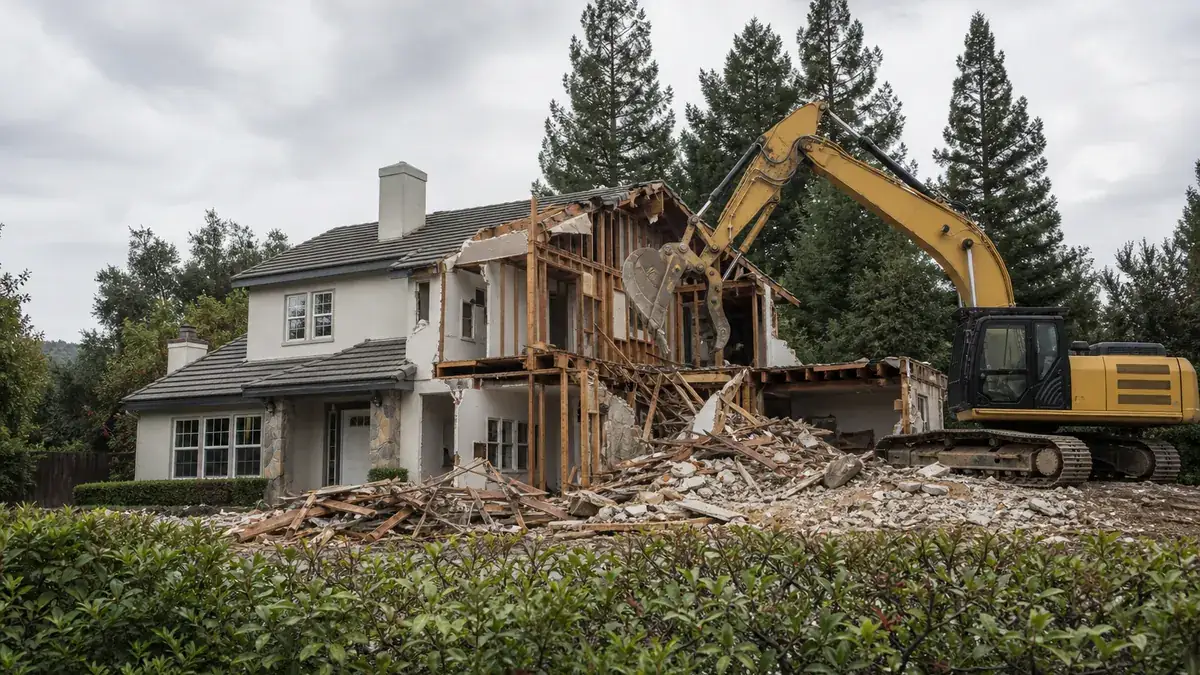
Complete teardown
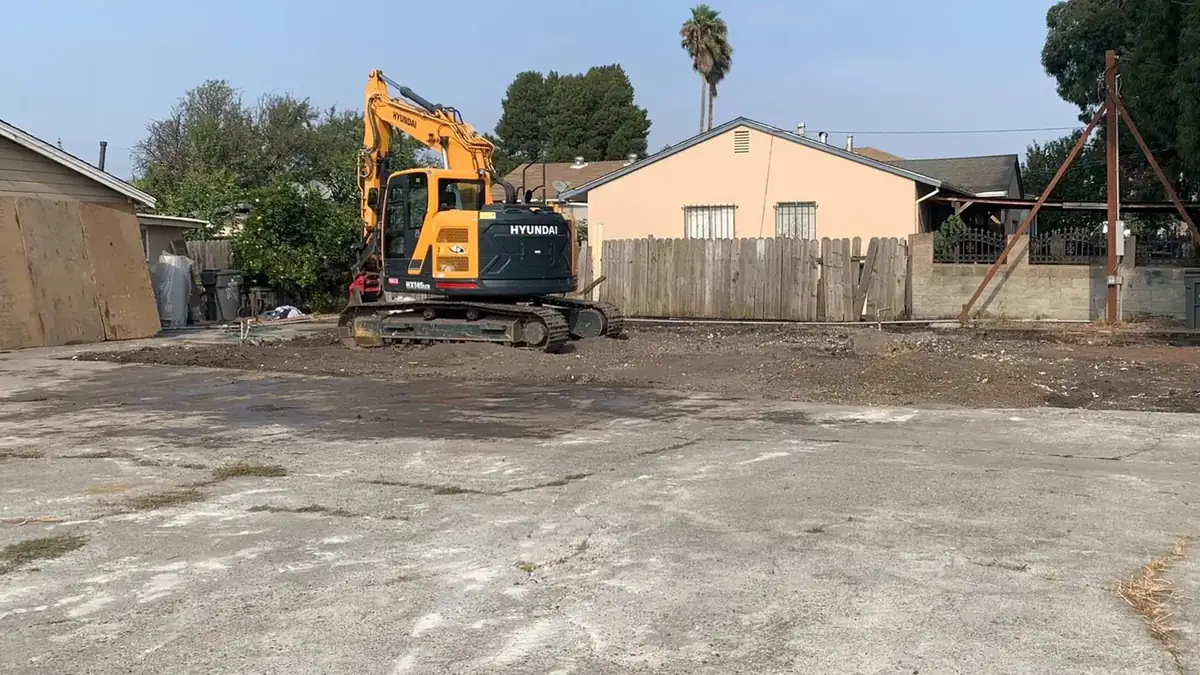
The entire house comes down, including the foundation, and the lot is cleared and rough graded for new construction. This is the most common choice for full rebuilds.
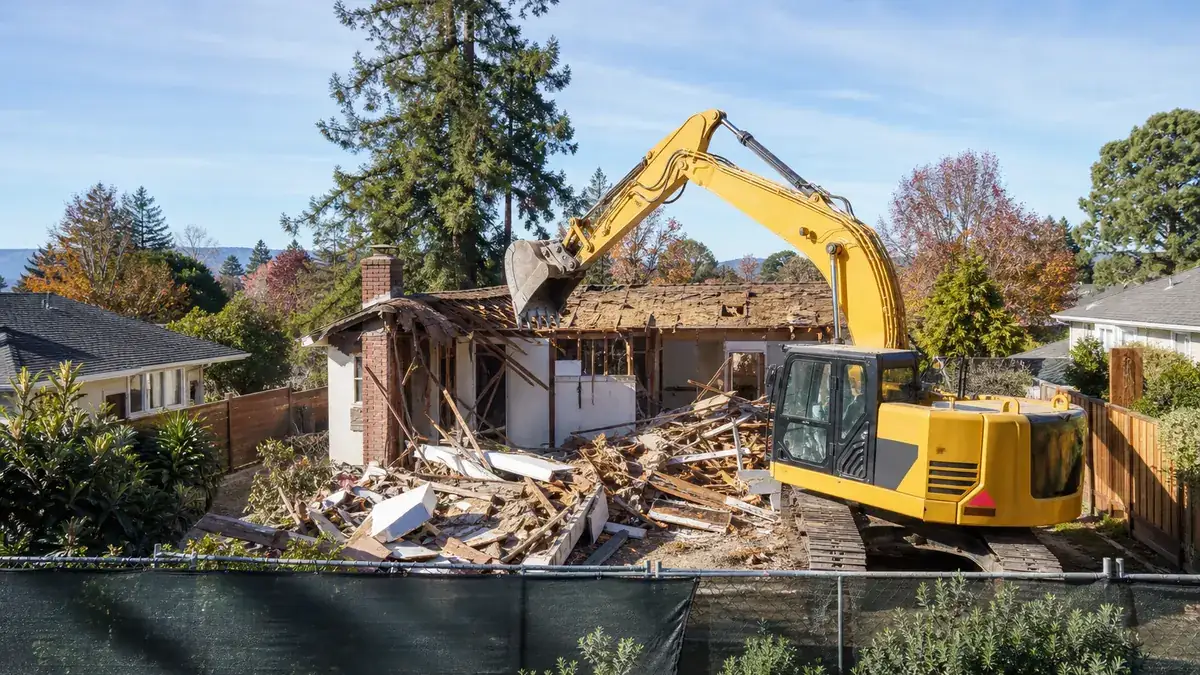
Partial demolition
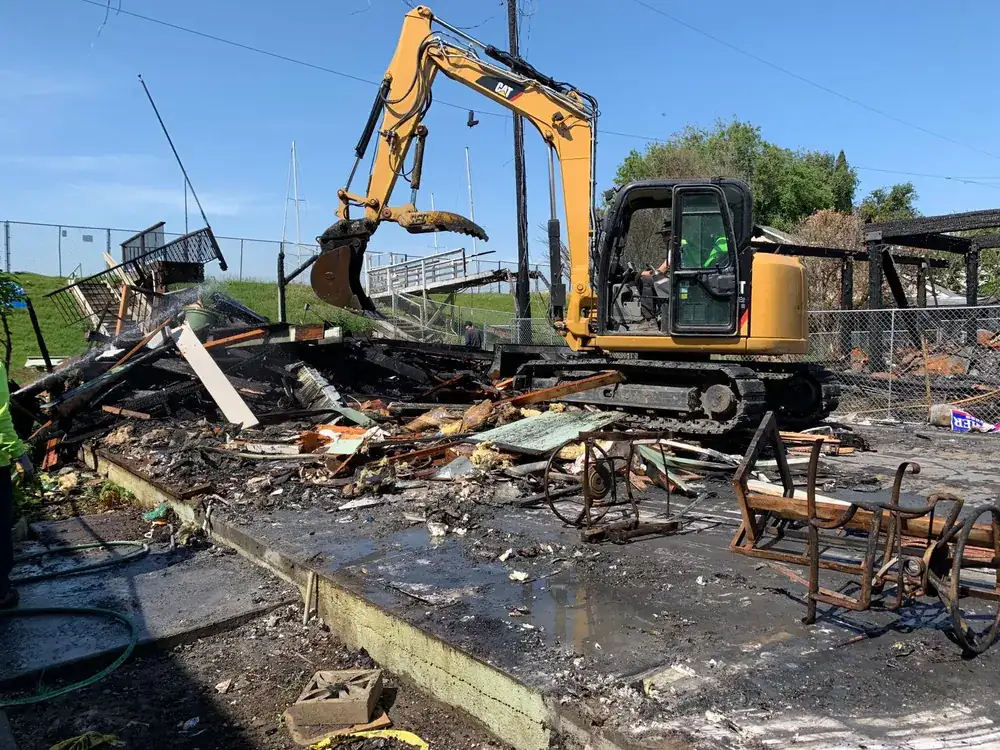
Part of the structure is removed, such as a wing, a garage attached to the house, a second story or an old addition, while the rest of the home stays. Partial work requires careful planning to protect the section that remains. Read our partial demolition project in Danville for a real example.
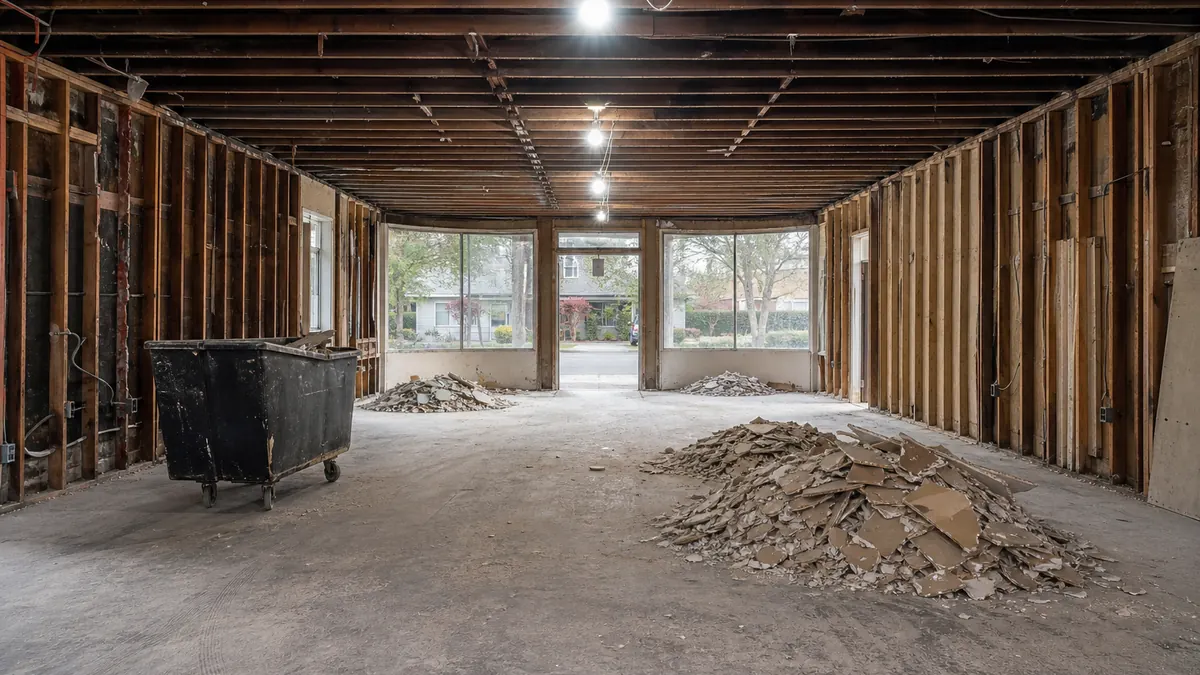
Interior (soft) demolition
Drywall, flooring, cabinets, fixtures and non-structural walls are removed for a remodel, leaving the structure in place for your contractor.
What has to happen before demolition
- Demolition permit. Every Bay Area city requires one for structural demolition. Some cities also review the project with planning, especially in historic areas.
- Utility disconnects. Gas and electrical service are shut off and removed by the utility, and water and sewer lines are capped to code.
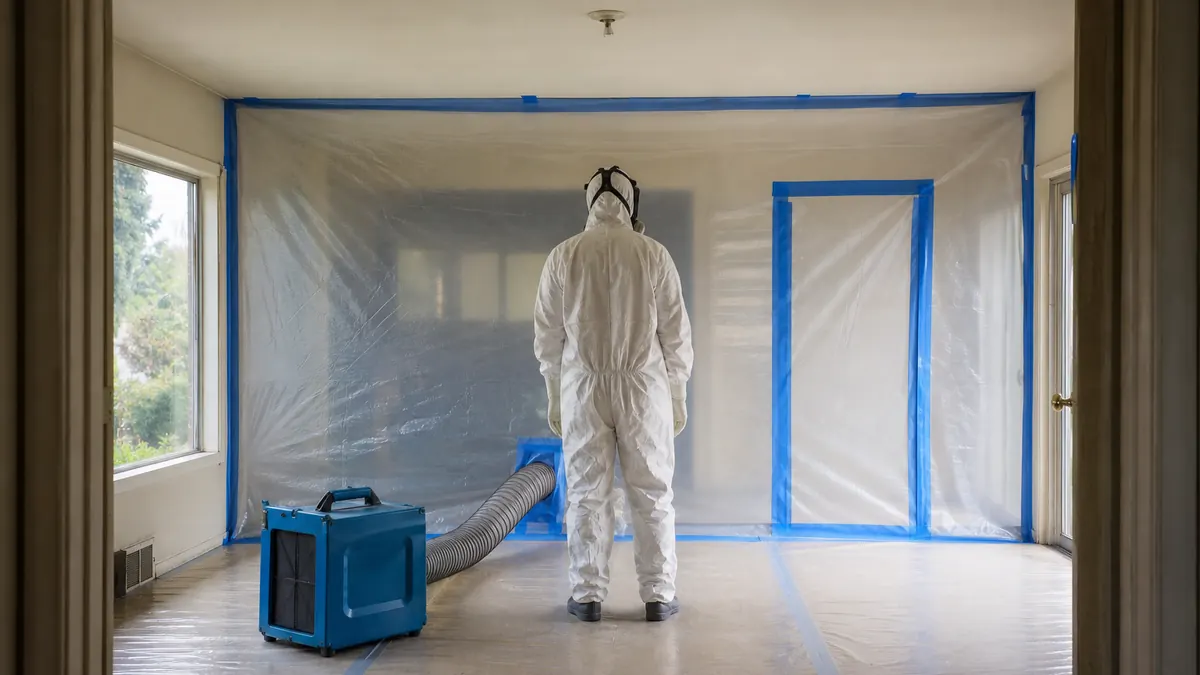
- Asbestos survey and notification. In the Bay Area, the air district generally requires an asbestos survey by a certified consultant before demolition, and a notification filed before work starts. If asbestos is found, a certified abatement contractor removes it first. Read what to know about asbestos before demolition.
- Neighbor considerations. Dust control, noise hours, street parking for trucks and protection of shared fences.
The demolition process
- Site assessment and written quote
- Permit, utility disconnects and required surveys
- Site protection: fencing, dust control and protection of trees or structures that stay
- Salvage of anything you want to keep
- Demolition with excavators and hand work where precision matters
- Sorting and haul-away, with concrete, metal and wood recycled when possible
- Foundation removal and rough grading
- Final inspection and a clean site for your builder
What affects the cost of demolition
- Size of the structure and number of stories
- Foundation type: slab, raised or basement
- Access for equipment and trucks
- Distance to recycling and disposal facilities
- Asbestos or other materials that need abatement first
- Whether part of the structure must be protected
Because these vary so much, demolition is priced after an on-site visit. Our quotes are written and itemized so you can see exactly what is included.
How long does residential demolition take?
The physical demolition of a typical single-family home takes a few days to two weeks. Permits, utility shutoffs and the asbestos survey usually take several weeks before that, so start the process as soon as your plans are approved.
Learn more about our house demolition service, or request a free on-site estimate below.
Frequently asked questions
Do I need a permit to demolish a house in the Bay Area?
Yes. You need a demolition permit from your city, utility disconnects and, in most cases, an asbestos survey and an air district notification before work starts.
How long does a house demolition take?
The demolition itself usually takes a few days to two weeks. Permits, utility shutoffs and the asbestos survey add several weeks before that, so start planning early.