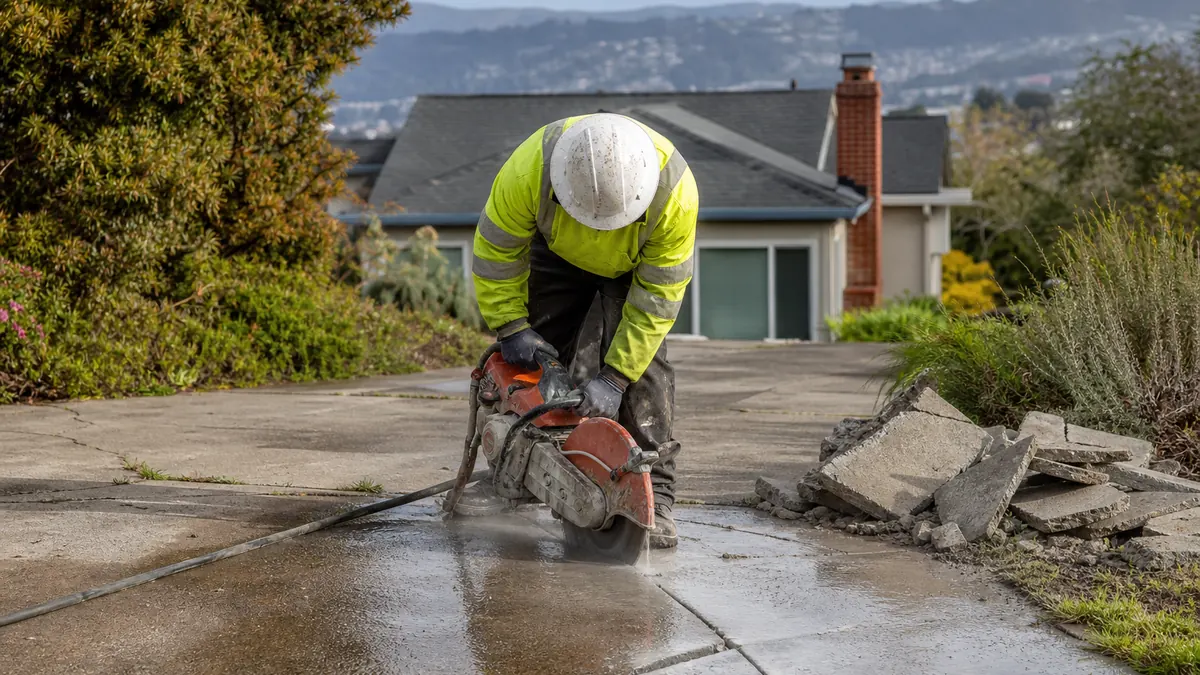
- Most residential concrete is removed by saw cutting, breaking with a jackhammer or excavator breaker, and hauling to a recycler.
- Price depends on area, thickness, reinforcement, access and haul distance.
- Small, thin patios can be DIY; driveways, thick or reinforced slabs are safer with a pro.
Cracked driveways, sunken patios, old slabs where a shed used to be, pool decks: concrete removal is one of the most common projects around Bay Area homes. It looks simple, but heavy material, hidden rebar, utility lines and the surfaces next to it make planning important. Here is how it works.
How concrete is removed
1. Saw cutting
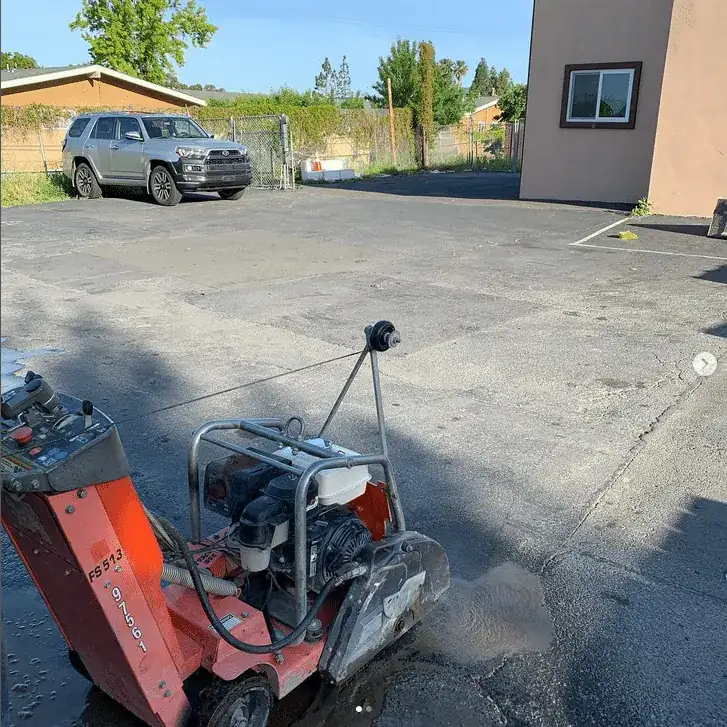
Where new and old concrete meet, or where part of a driveway stays, the slab is cut with a concrete saw to make a straight, clean edge. This protects the section that stays from cracking.
2. Breaking
Thin slabs can be broken with a jackhammer. Thicker or reinforced concrete is broken faster and more safely with a hydraulic breaker on a compact excavator. Rebar and wire mesh are cut out as the slab comes apart.
3. Loading and hauling
Broken concrete is loaded into trucks or bins and taken to a recycling facility, where it is crushed and reused as base rock.
4. Base preparation
Once the concrete is gone, the base is graded and compacted for whatever comes next: new concrete, pavers, turf or planting.
What affects the cost of concrete removal
- Area in square feet
- Thickness: driveways are thicker than walkways
- Reinforcement: rebar and mesh slow down breaking
- Access: can a machine get in, or is it all hand work?
- Haul distance and number of truckloads
- Permits: driveway work touching the sidewalk or street often needs one
DIY or hire a pro?
A small, thin, unreinforced patio can be a weekend DIY job with a rented jackhammer and a dumpster, if you are comfortable with heavy, dusty work. Hire a professional when:
- The concrete is thicker than about 4 inches or has rebar
- It is a driveway or near the street or sidewalk
- Utilities or irrigation run underneath
- Part of the slab must stay intact
- You need the base ready for new pavers or concrete
Concrete is heavier than most people expect. Disposal fees and bin rentals add up fast, and the pro's price often ends up close to the DIY cost once everything is counted.
Safety basics
Concrete dust contains crystalline silica, which is harmful to breathe. Professionals use water to control dust and wear respirators, eye and hearing protection. Always locate utilities before breaking concrete; call 811 before you dig.
What comes next
With the old concrete out, you can replace it with new concrete, a paver driveway or patio, turf or a garden. We install pavers and new concrete, and prepare the base ourselves. Learn more about our concrete removal service.
Frequently asked questions
Can I remove a concrete patio myself?
A thin, unreinforced patio of a few hundred square feet can be a DIY job with rented tools. Thick or reinforced slabs, driveways and anything near utilities are safer and usually cheaper overall with a pro.
What happens to removed concrete?
Clean concrete is taken to recycling facilities where it is crushed into base rock and reused.