- Our recent written estimates: $10,500 to $11,500 for a partial removal (fill-in) and $18,000 to $21,500 for a full removal, permit included.
- Most Bay Area cities and counties require a permit and inspections to remove an inground pool, and each one sets its own rules.
- How long the work takes depends on the pool and the access, and permit review time depends on your city.
- If you might build on the area later, choose a full removal with compacted, tested fill.
An old pool is one of the most expensive things a Bay Area homeowner can keep in the backyard. Chemicals, power, repairs and insurance add up every month, and the pool takes over space that could be a lawn, a patio or an ADU. Removing it is a one-time project, but it has to be done correctly to avoid settling, drainage problems or trouble when you sell.
This guide explains the two removal methods, what pool removal really costs in 2026, how permits work in Bay Area cities, what happens each day on site and what you can do with the space afterward. It is based on the pool removals Bay Demo has completed across the region.
Why Bay Area homeowners are removing their pools
- Ongoing costs. Chemicals, electricity for the pump and heater, cleaning and repairs cost thousands of dollars a year, even when nobody swims.
- Big repairs coming due. Replastering, new equipment or crack repairs can cost as much as removing the pool entirely.
- Water use. Pools lose a lot of water to evaporation, which matters during California droughts and water restrictions.
- Safety. A pool is a drowning risk for young children and a liability when friends and neighbors visit.
- Space. In a typical Bay Area lot the pool uses a large share of the backyard. Removing it opens room for an ADU, a garden, a play area or a patio.
Partial removal vs full removal
Most Bay Area building departments recognize two methods for inground pools, and each city writes its own rules for them. The right one depends on what you plan to do with the area.
| Partial removal (fill-in) | Full removal | |
|---|---|---|
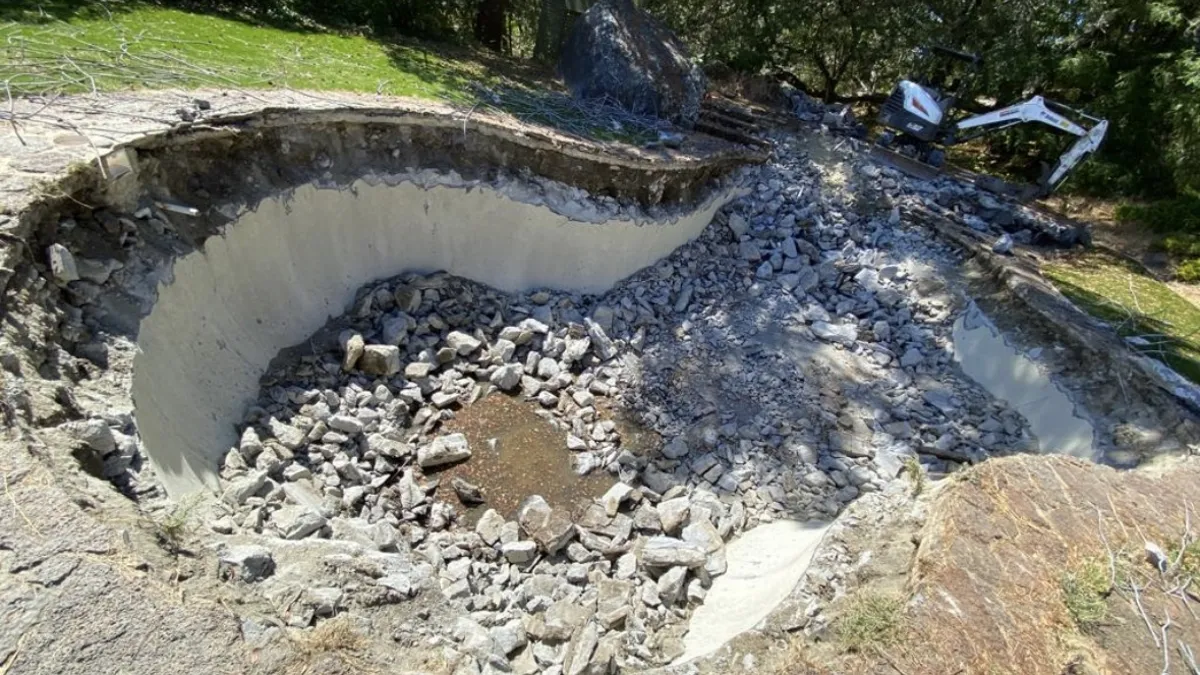
| What happens | Holes are broken in the floor for drainage, the top of the walls is removed below grade, then the pool is backfilled and compacted. | The entire shell, floor and walls, is broken out and hauled away, then the hole is backfilled in compacted layers. |
| Recent Bay Demo estimates | $10,500 to $11,500 | $18,000 to $21,500 |
| Best for | Lawn, garden, turf or light patio use | ADUs, additions, garages or any future structure |
| Resale | Must be disclosed when you sell | Preferred by most buyers and inspectors |
Above-ground pools are much simpler: they are drained, taken apart and hauled away, usually in a day or two and often without a permit.
For a deeper look at the decision, read 5 key considerations before pool removal.
How much does pool removal cost in the Bay Area in 2026?
Every pool is different, but these are the ranges we see most often in Bay Area cities:
| Project | Typical range | Time on site |
|---|---|---|
| Above-ground pool removal | Quoted after the visit | Set after the visit |
| Inground pool, partial removal (fill-in) | $10,500 to $11,500 | Set after the visit |
| Inground pool, full removal with compaction testing | $18,000 to $21,500 | Set after the visit |
| Extra pool deck or patio concrete | Priced by area | Adds time |
What moves the price: the size and depth of the pool, how much decking surrounds it, whether a fence or wall has to come down for access, how far the trucks have to haul, how much clean fill is needed and what your city requires for permits and testing. A written quote should list each of these. Our guide on what changes the price and how to compare quotes goes line by line.
Pool removal permits in the Bay Area
In most Bay Area cities, yes. Pleasanton and Cupertino, for example, say it plainly in their pool removal handouts: a permit is required to fill in or remove a pool, and the city inspects the work. Skipping the permit can lead to fines, a stop-work order, and serious problems when a buyer's inspector or the city finds an unrecorded fill. Always confirm with your own building department, because the rules are set city by city.
What the permit process usually involves:
- A simple site plan showing the pool, access route and removal method.
- A compaction report from a geotechnical or civil engineer when the area may be built on. In Pleasanton and Cupertino, a pool abandoned in place (partial removal) needs no compaction test, but the area is then for landscaping only; a full removal with the engineer's report keeps it buildable. Some cities ask for the report on every removal.
- Gas and electrical lines that served the pool equipment capped or removed before the inspection.
- An inspection before backfill (after the floor is broken or the shell is out) and a final inspection to close the permit.
Requirements and fees vary from city to city, and most cities calculate the fee when they review the application. A contractor who works across the region knows what each building department expects. At Bay Demo we prepare the application and schedule every inspection, and your written quote shows how the permit is handled.
The pool removal process, step by step
- Free on-site assessment. We check the pool size, depth, deck, equipment, access and utilities, and give you a written quote.
- Permit. We file the permit and coordinate any utility disconnects.
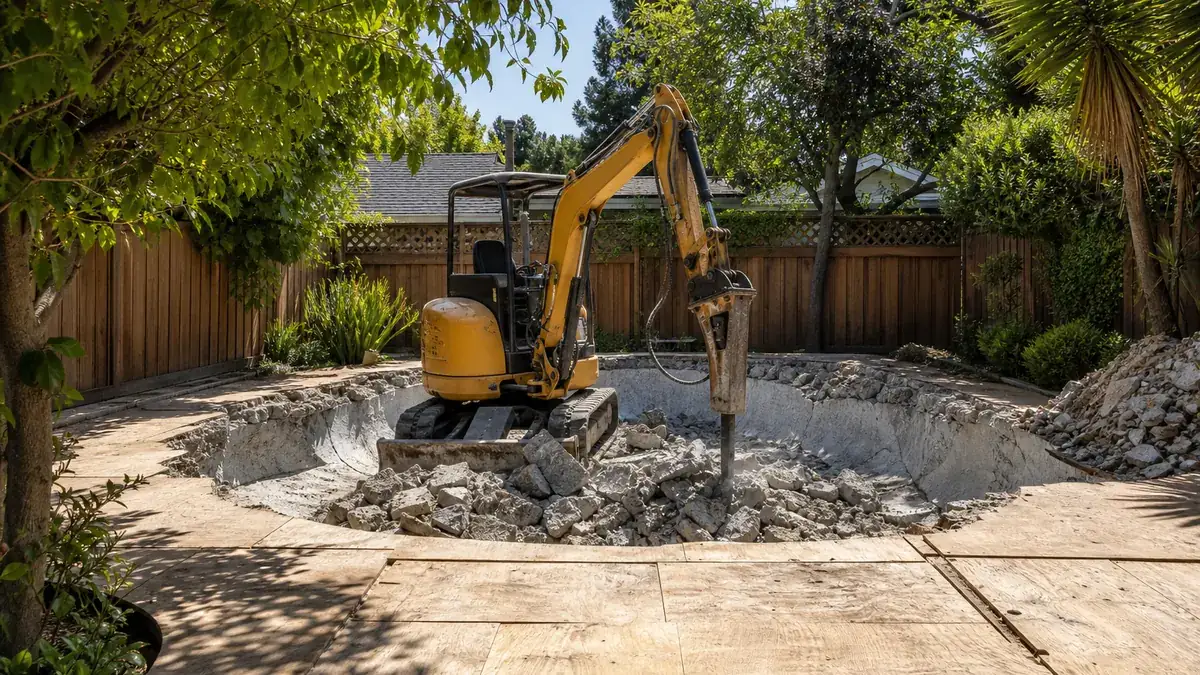
- Protection and access. Plywood and padding go down over the driveway and any hardscape on the route. If a fence section must come out, we put it back afterward.
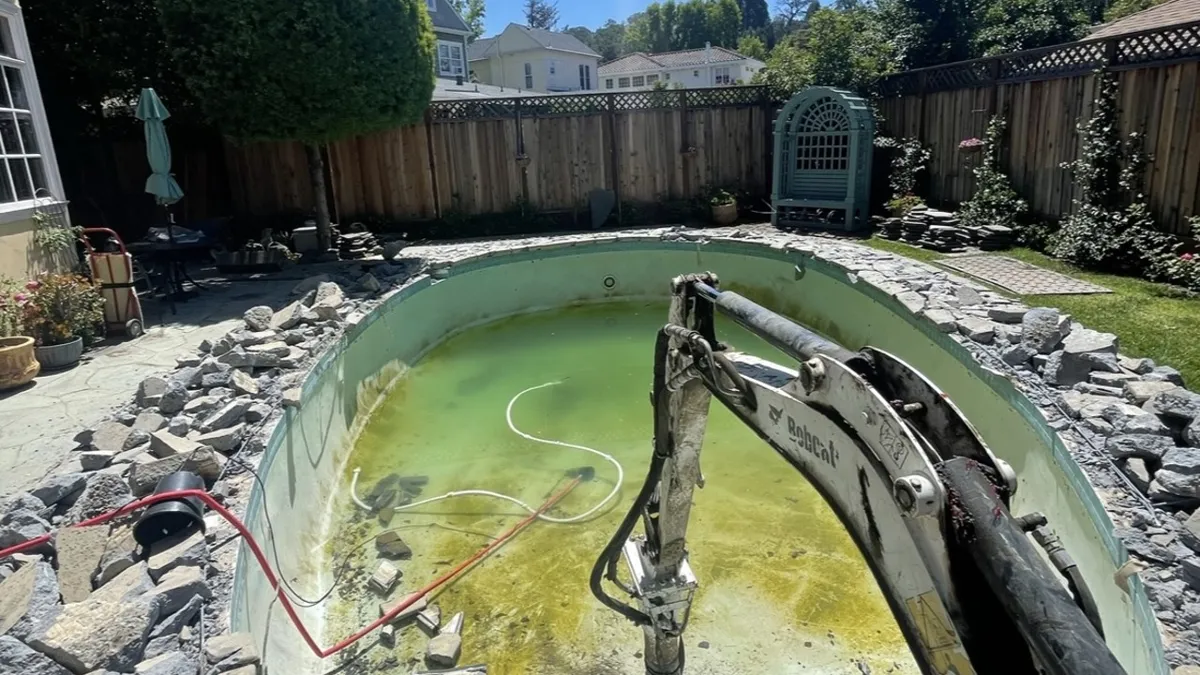
- Draining and equipment removal. The pool is drained and pumps, filters and heaters are removed. Lines are capped.
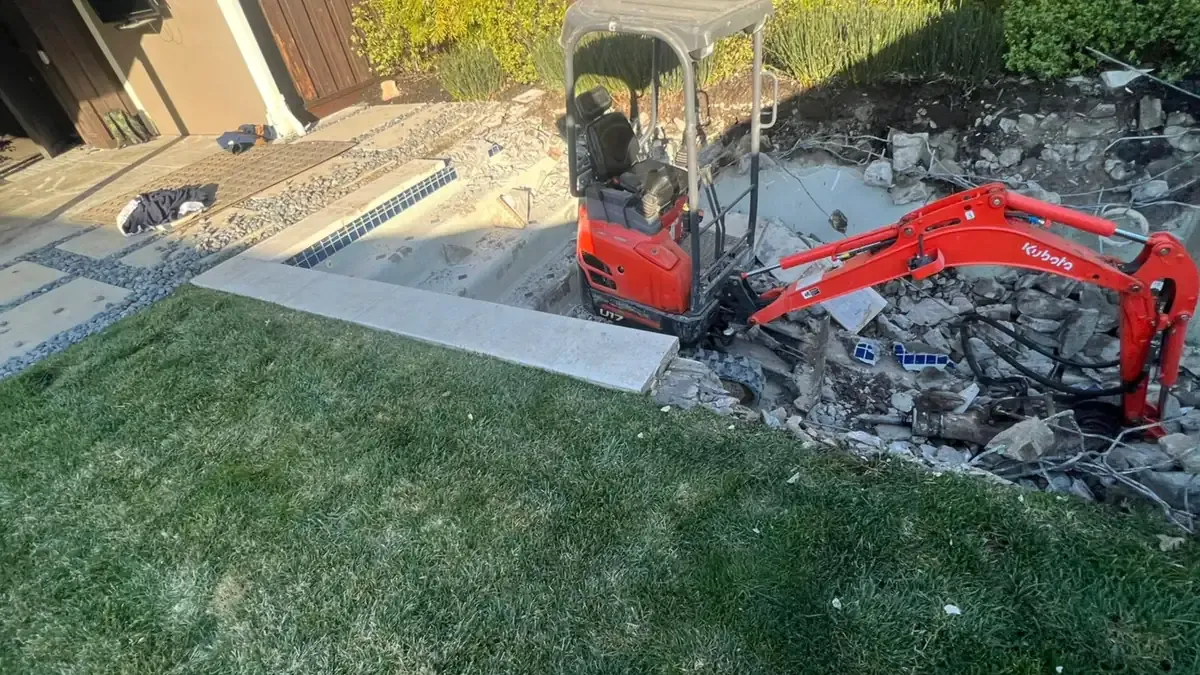
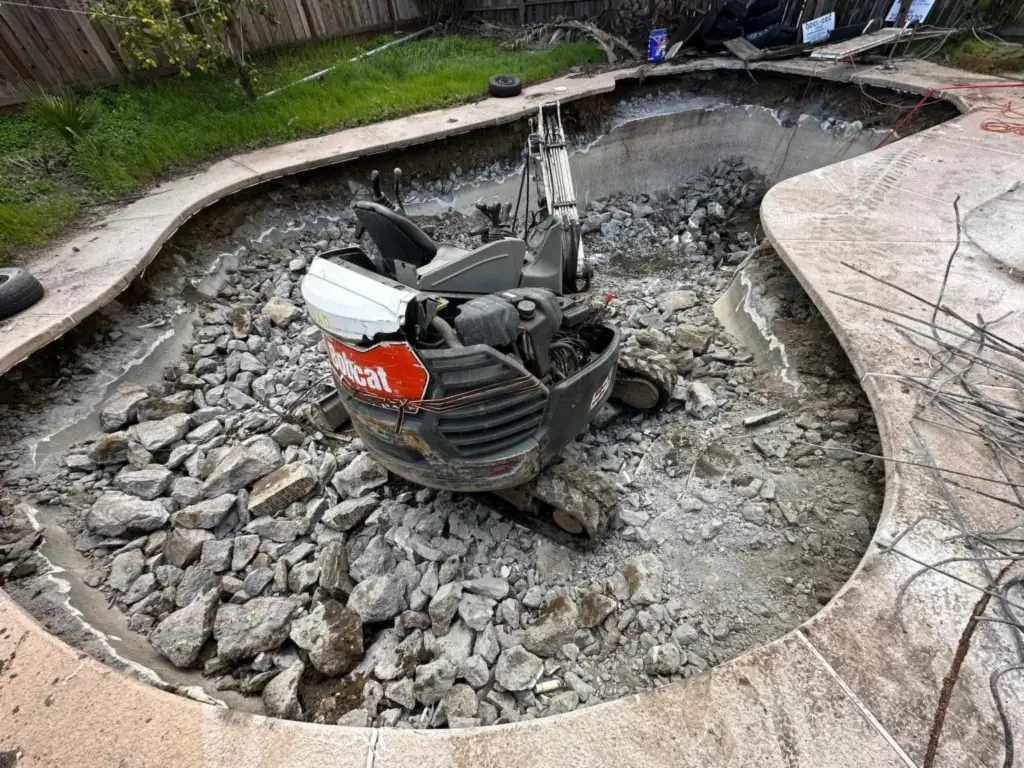
- Demolition. The shell is broken with a compact excavator and breaker. For partial removals, drainage holes are broken through the floor.
- Haul-away. Concrete and debris go to licensed facilities, where most of it is recycled.
- Backfill and compaction. Clean fill is placed and compacted in layers so the ground does not settle.
- Grading and final inspection. The area is graded to drain away from the house and the city signs off.
See the full day-by-day breakdown in our pool removal process and timeline guide.
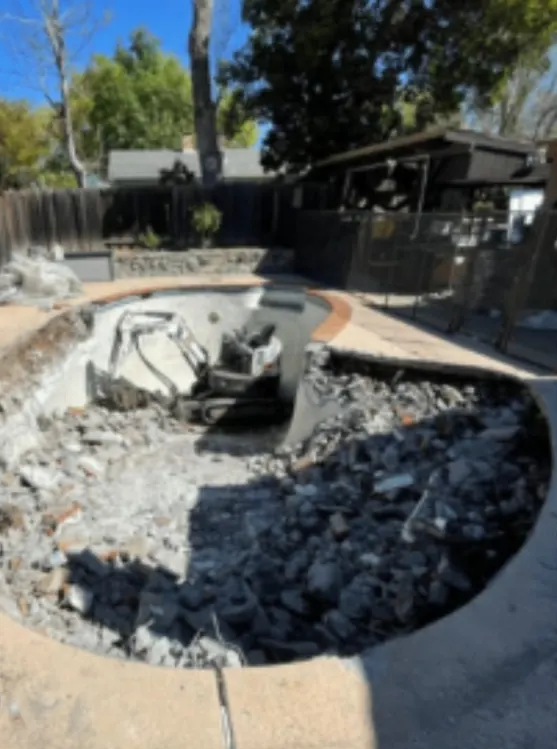 Before
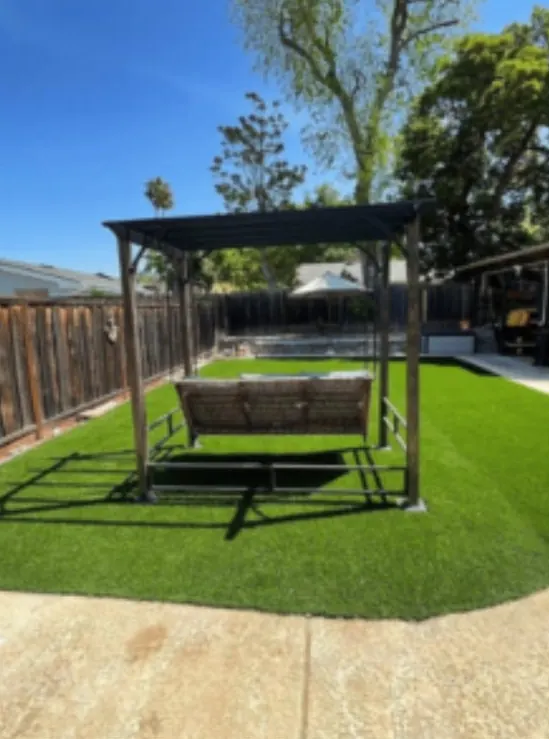 After
What to do with the space after pool removal
This is the fun part. The most popular choices we see in the Bay Area:
- Lawn or artificial turf for kids and pets.
- A paver patio with seating, a fire pit or an outdoor kitchen. We install pavers right after the removal.
- A drought-tolerant garden with California natives.
- Raised vegetable beds in the sunniest spot of the yard.
- An ADU, which requires a full removal with compacted, tested fill.
More ideas, with the removal method each one needs: 8 ideas for your new backyard.
How to choose a pool removal contractor
- Check the license on the California CSLB website. Bay Demo is license #1055298.
- Ask for proof of insurance.
- Make sure the quote includes the permit, utility caps, haul-away, clean fill, compaction and the final inspection.
- Ask how they will protect your driveway and landscaping.
- Read recent reviews from homeowners in your area.
Ready to see what your project would cost? Learn more about our pool removal service or fill out the form below for a free on-site estimate.
Frequently asked questions
How much does pool removal cost in the Bay Area?
Our recent written estimates run $10,500 to $11,500 for a partial removal (fill-in) and $18,000 to $21,500 for a full removal, permit included. Above-ground pools cost much less. Size, access, decking and city requirements move the price.
Do I need a permit to remove a pool in the Bay Area?
In most Bay Area cities, yes. Pleasanton and Cupertino, for example, require a permit to fill in or remove a pool and inspect the work. Rules differ by city, so check with your building department. A licensed contractor like Bay Demo prepares the application and schedules the inspections.
How long does pool removal take?
It depends on the pool, the access and the method, and permit review time depends on the city. We confirm the start date once the permit is approved.
Can I build on the area after removing my pool?
Choose a full removal if you may build an ADU, addition or other structure. The entire shell comes out and the fill is compacted in layers and tested.