- Plan for about 2 to 4 weeks from the first visit to the final inspection.
- The permit usually takes 1 to 2 weeks; the work on site takes 5 to 10 working days.
- You do not need to be home every day, but the crew needs access to the backyard and equipment area.
Knowing what will happen, and when, makes a pool removal much less stressful. Here is how a typical Bay Area pool removal runs, from the first phone call to the day the city closes the permit.
Step 1: On-site assessment (day 1)
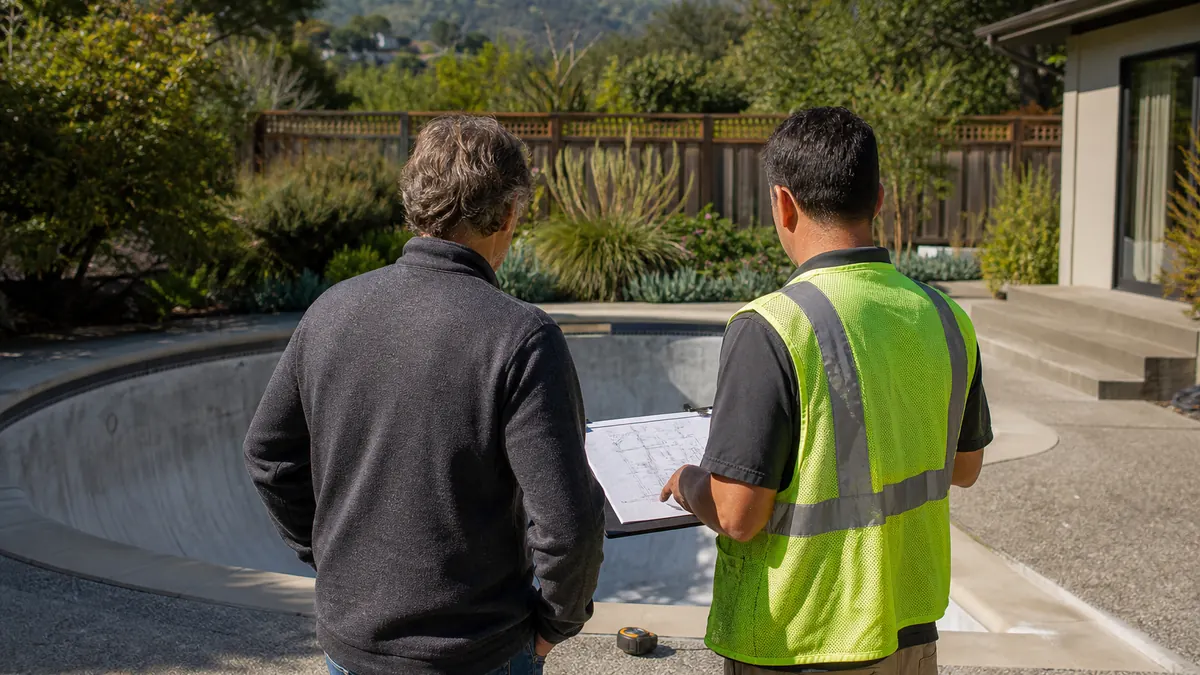
We visit the property to measure the pool, check the depth, look at the deck and equipment, and plan the access route for equipment and trucks. We also ask what you want to do with the space, because that decides between a partial and a full removal. You receive a written, itemized quote, often the same day.
Step 2: Permit and planning (about 1 to 2 weeks)
Once you approve the quote, we prepare and submit the permit to your city. While the city reviews it, we schedule the crew, arrange any utility disconnects and order the clean fill. Approval time depends on the city; some issue pool removal permits in a few days, others take a couple of weeks.
Step 3: Protection and draining (day 1 on site)
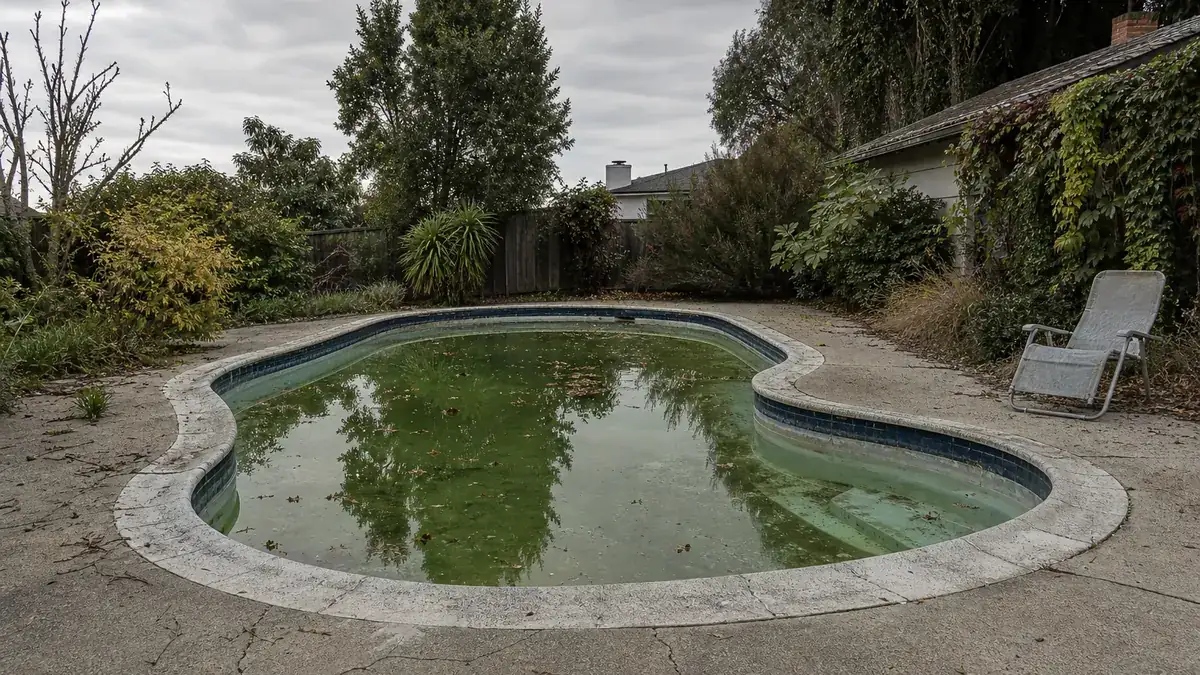
The crew lays plywood and padding over the driveway and any hardscape on the access route. If a fence section needs to come out for access, it is removed carefully and reinstalled at the end. The pool is drained and the pump, filter and heater are disconnected and removed, with lines capped.
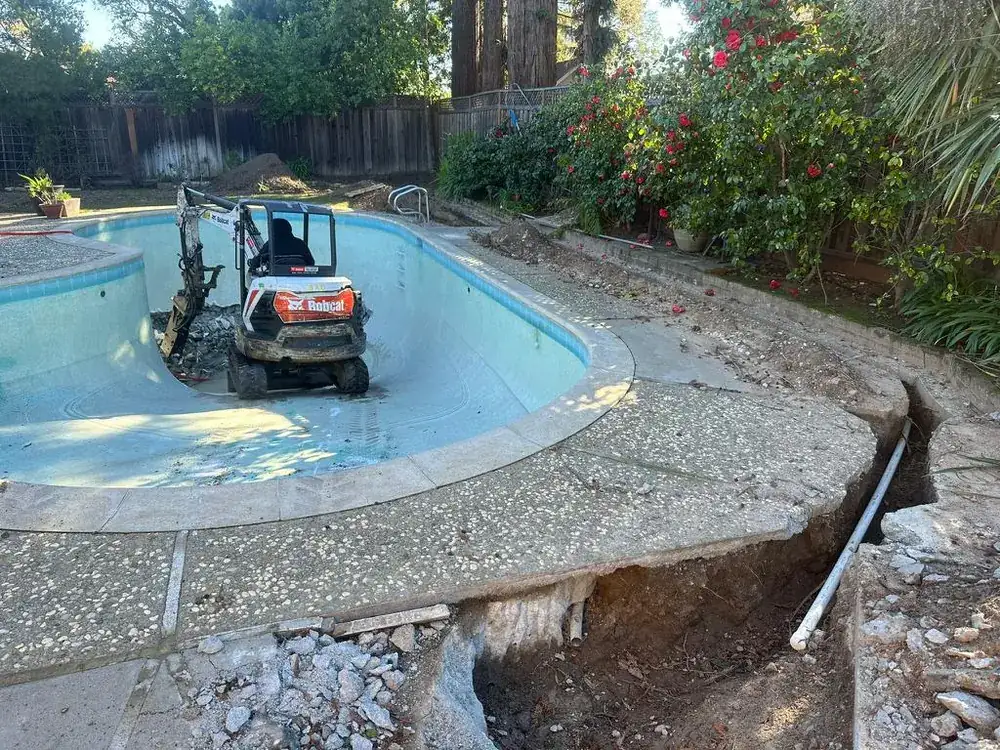
Step 4: Demolition (days 2 to 4)
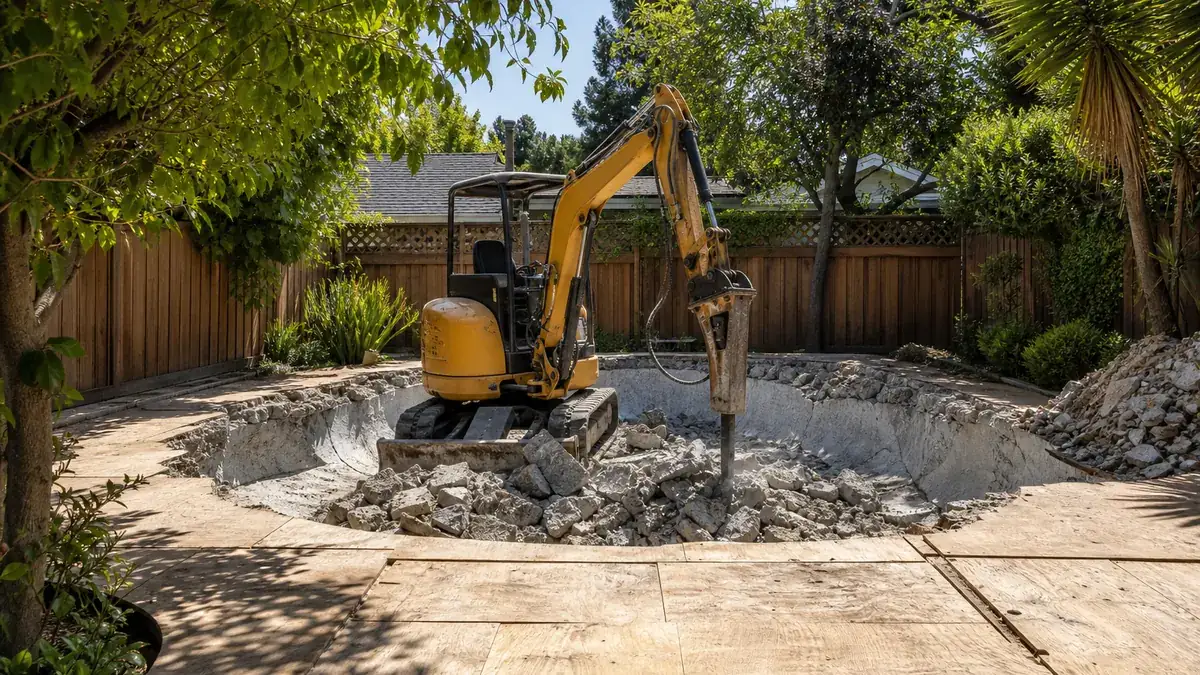
A compact excavator with a hydraulic breaker breaks up the coping, deck and shell. For a partial removal, holes are broken through the floor so water can drain, and the top of the walls is removed below grade. For a full removal, the entire shell comes out. Many cities inspect at this point, before any fill goes in.
Step 5: Haul-away (overlaps with demolition)
Concrete and debris are loaded and hauled to licensed facilities, where most of the concrete is recycled. Trucks come and go during this phase, so we coordinate parking and street access with you.
Step 6: Backfill and compaction (days 4 to 8)
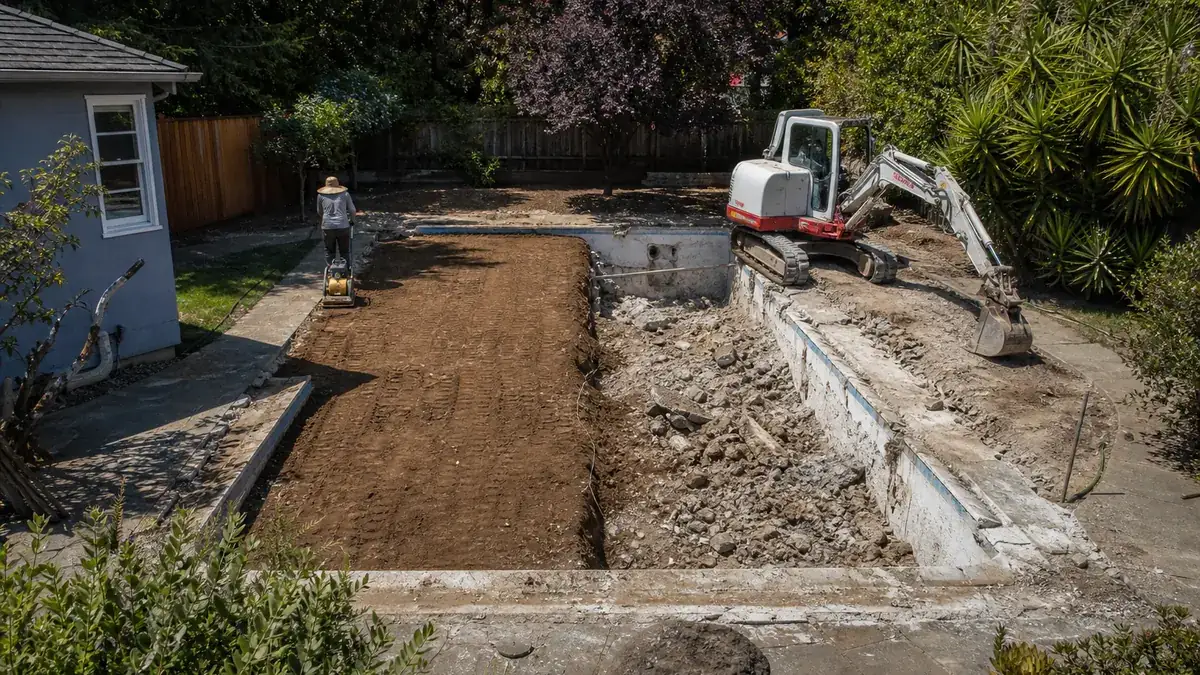
Clean fill soil is brought in and spread in layers, and each layer is compacted before the next one goes down. This is what keeps the ground from settling later. On full removals intended for future building, a soils engineer observes and tests the compaction.
Step 7: Grading and final inspection (days 8 to 10)
The area is graded so water drains away from the house, the site is cleaned and any fence sections are put back. The city inspector visits to sign off, which closes the permit. Keep the final inspection record with your home documents; you will want it when you sell.
What can slow a pool removal down?
- Rain. Wet soil cannot be compacted properly, so heavy rain can pause backfilling.
- Permit backlogs at busy building departments.
- Tight access that requires smaller equipment or extra hand work.
- Surprises underground, like old buried concrete or unmapped lines.
For costs, permits and removal options in one place, read the complete guide to pool removal in the Bay Area, or see how our pool removal service works.
Frequently asked questions
How long does it take to remove an inground pool?
Most inground pool removals take about 5 to 10 working days on site. Add one to two weeks for the permit, depending on the city.
Do I need to be home during the work?
No. We need access to the backyard and the pool equipment area. We keep you updated every day and ask you to be available for the final walkthrough.