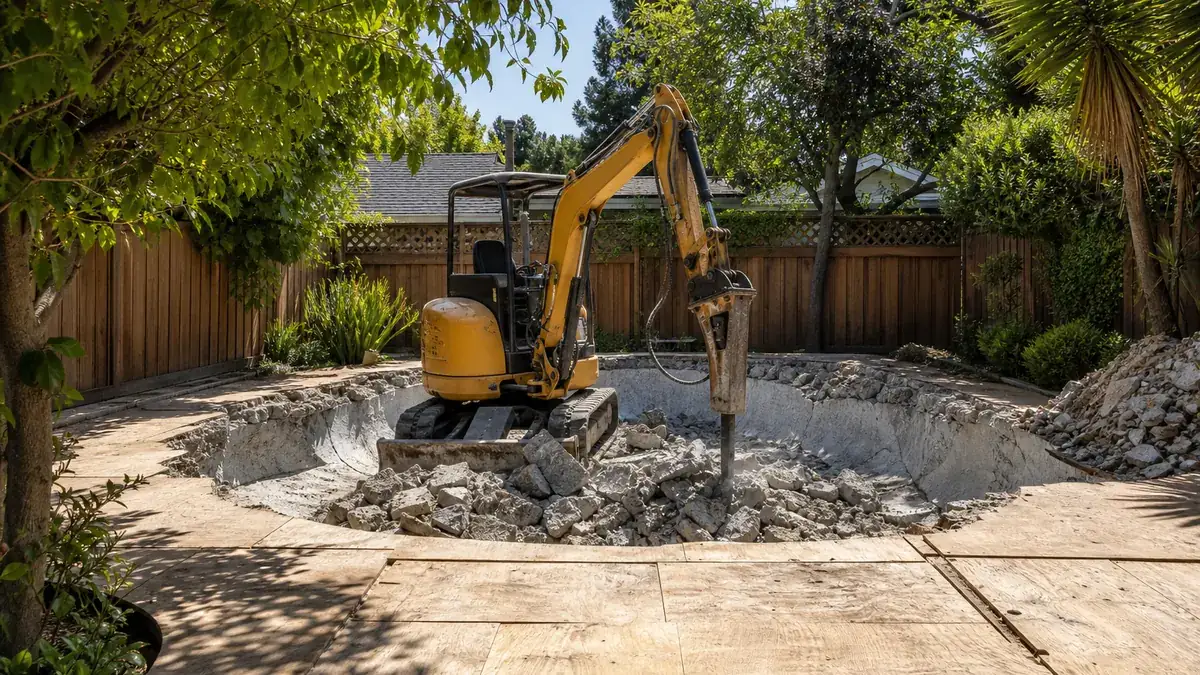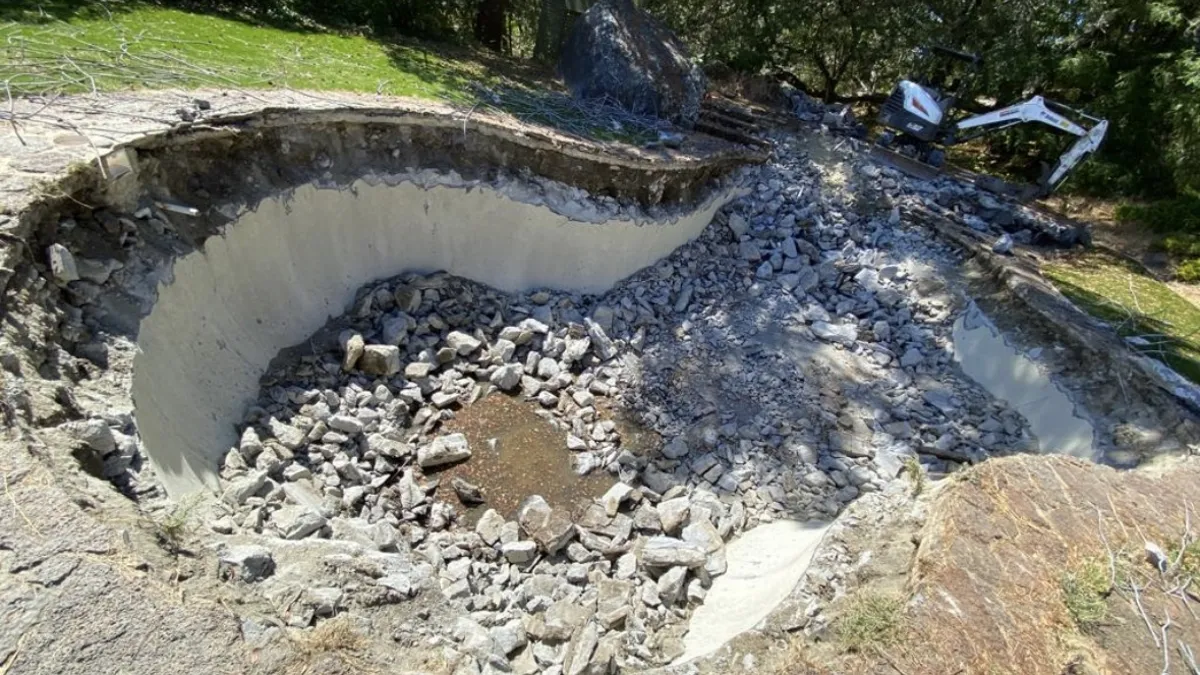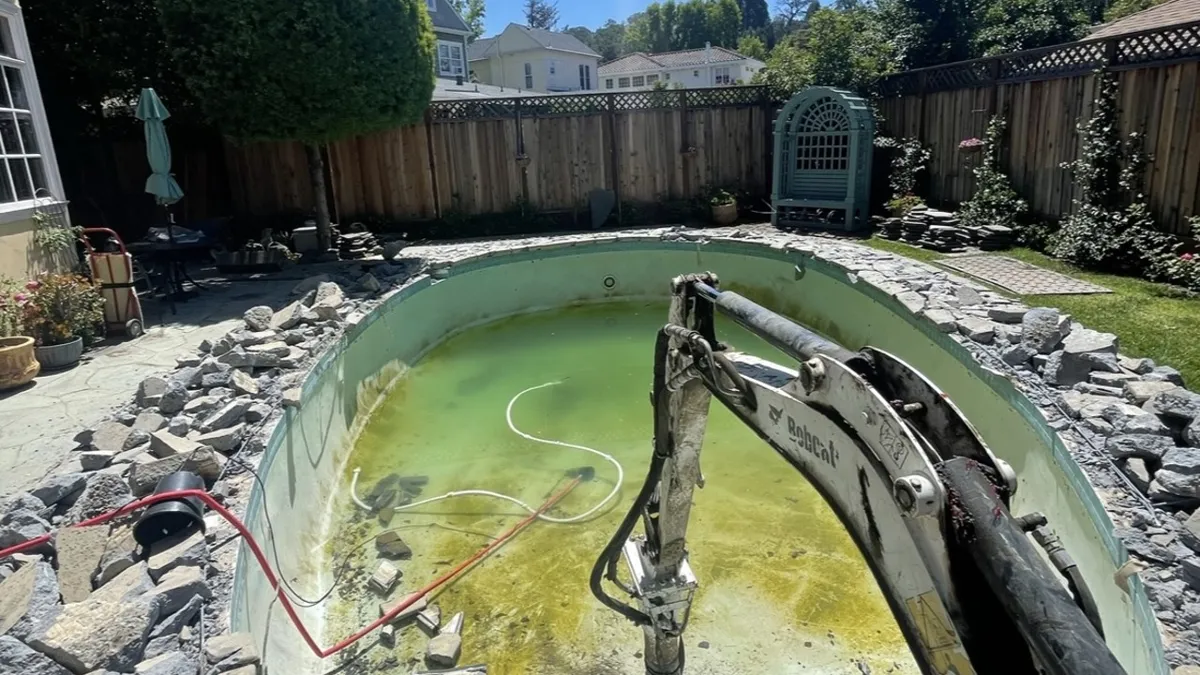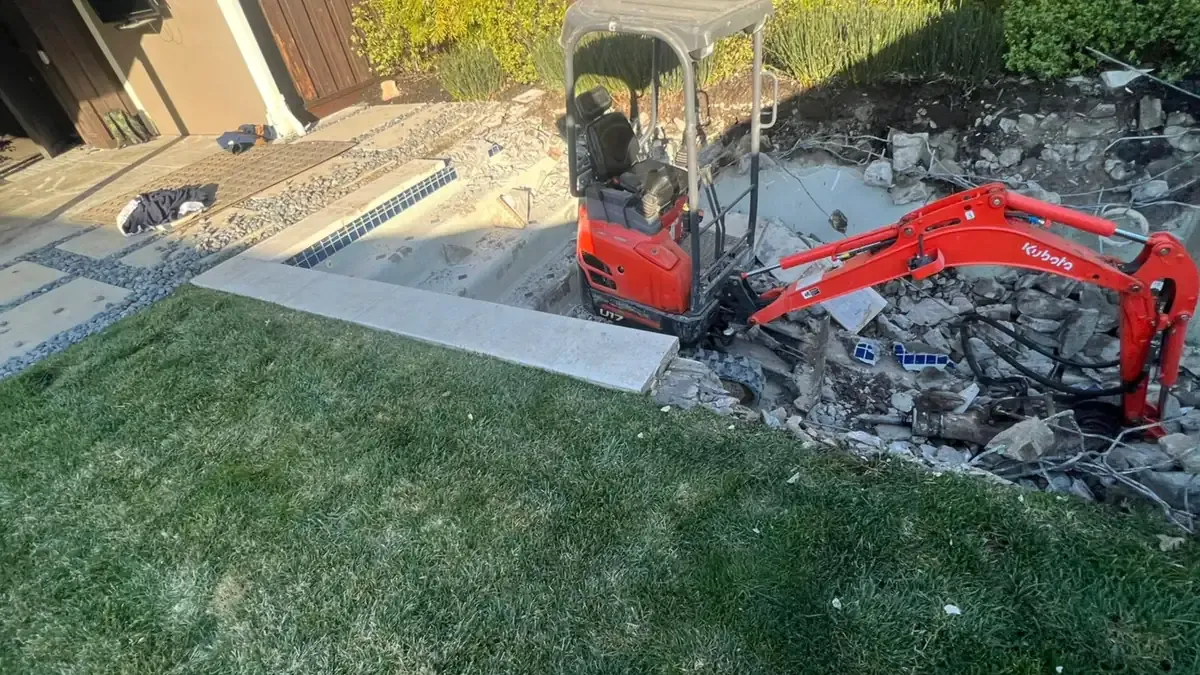
- You can remove a pool in the Bay Area rainy season. Most cities ask for an erosion and sediment control plan for winter grading, and Oakland adds a wet weather grading moratorium from October 15 to April 15.
- Pool water never goes to the storm drain. In Contra Costa and Alameda counties it goes to the sanitary sewer, and Central San asks for a free permit with 48 hours of notice.
- For a full removal, the fill has to pass a compaction test. Wet soil is the hardest part to get right, so dry weather windows matter more than the calendar.
This week the Bay Area got its first big storm of the season. On November 18, KQED reported that the National Weather Service expected more than 5 inches of rain across the region through Friday, with a flood advisory for Contra Costa and Santa Clara counties and flooding that nearly shut I-580. The same report noted that the weather service did not issue a flood watch because the ground was not saturated yet.
That last detail is the one that matters for a backyard project. NOAA's Climate Prediction Center has an El Niño Advisory in effect and expects a strong El Niño through January to March 2027, and its December to February outlook favors above-normal rain for California. If you have been thinking about removing your pool, here is what the wet season changes and what it does not.
Watch the whole job: a real Bay Demo pool removal, start to finish, with these winter rules on screen (step-by-step notes).
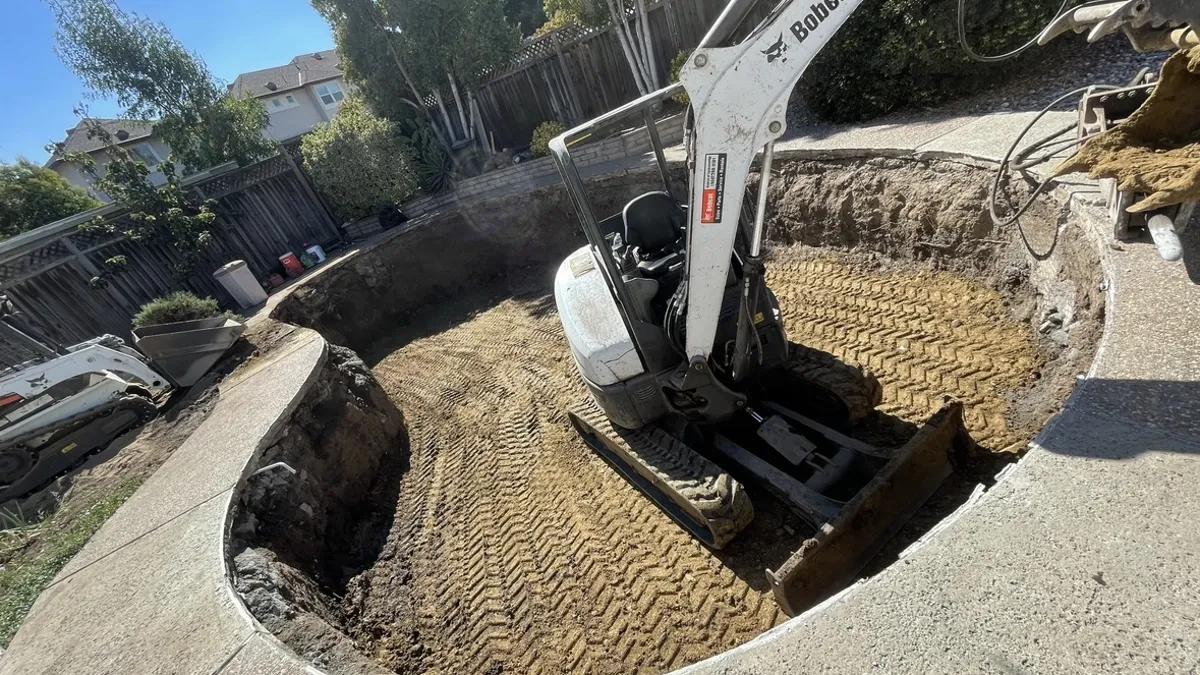
Can you remove a pool in winter?
Yes. We did not find any East Bay or South Bay city that bans residential pool removal in the winter. What changes is the paperwork and the scheduling around the dirt work:
- Erosion control plan. The Contra Costa Clean Water Program says a grading project needs an erosion control plan with "seasonally appropriate" measures before the grading permit is issued. Cities define their own rainy season, most often from October 1 or 15 to April 15 or 30, so check yours.
- Oakland is stricter. Oakland has a wet weather grading moratorium from October 15 to April 15. Grading needs the building official's approval, with exceptions for emergency stabilization or a request backed by a geotechnical engineer's letter for wet season work.
- Pleasanton asks for construction best management practice (BMP) sheets with every pool demolition permit submittal, whatever the month.
Rules are different in each city. Our pool removal permit guide lists what each Bay Area building department asks for.
Draining the pool when it rains
Every removal starts with draining, and the rule is the same in rain or sun: pool water does not go to the street or the storm drain.
- Central Contra Costa (much of Walnut Creek, Lafayette, Orinda, Moraga and Danville): Central San requires a free permit to discharge pool water to the sanitary sewer, with 48 hours of notice. Its standards limit the flow to 20 gallons per minute, require a pH between 5.5 and 11.5, and say not to drain within 5 days of adding chemicals.
- Alameda County (Pleasanton, Dublin, Livermore, Oakland and nearby): the Clean Water Program says to drain to a sanitary sewer cleanout. Draining water with chlorine or copper algaecide to a storm drain is prohibited.
At 20 gallons per minute, a typical pool takes a day or more to drain, so it helps to pick a dry window for it. Central San also asks you to turn off the pump if the water backs up at the cleanout. More details in our guide to draining a pool in California.
Do not leave a pool empty through the storms
An inground pool is built to hold water. When it sits empty, rain that soaks into the soil around it pushes on the shell from outside and below. Forensic engineers who investigate pool damage describe how an empty pool can lift, or "float", when the hydrostatic relief valve in the floor does not work, and how surface water that would normally drain away can collect in the soil around the pool (Envista Forensics).
That is why a removal should go from draining to breaking the floor without long gaps. Breaking the floor lets water reach the native soil. Pleasanton, for example, requires an opening of at least 24 inches to natural soil in the floor of a partially removed pool "to expose soil and prevent water accumulation."
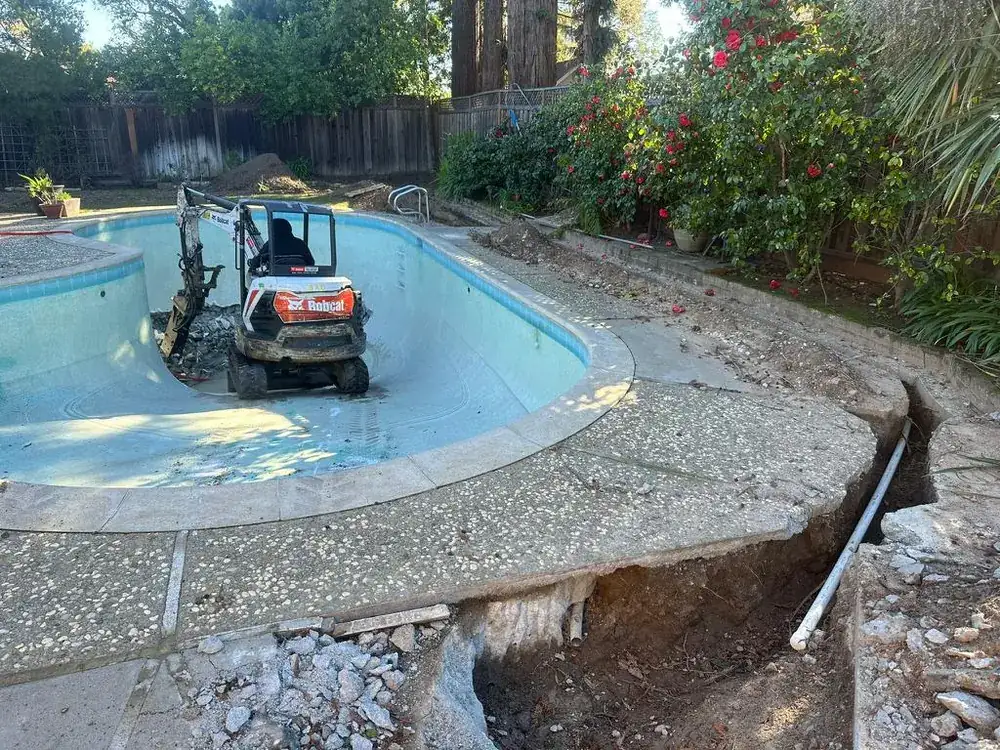
Compaction: the part rain affects the most
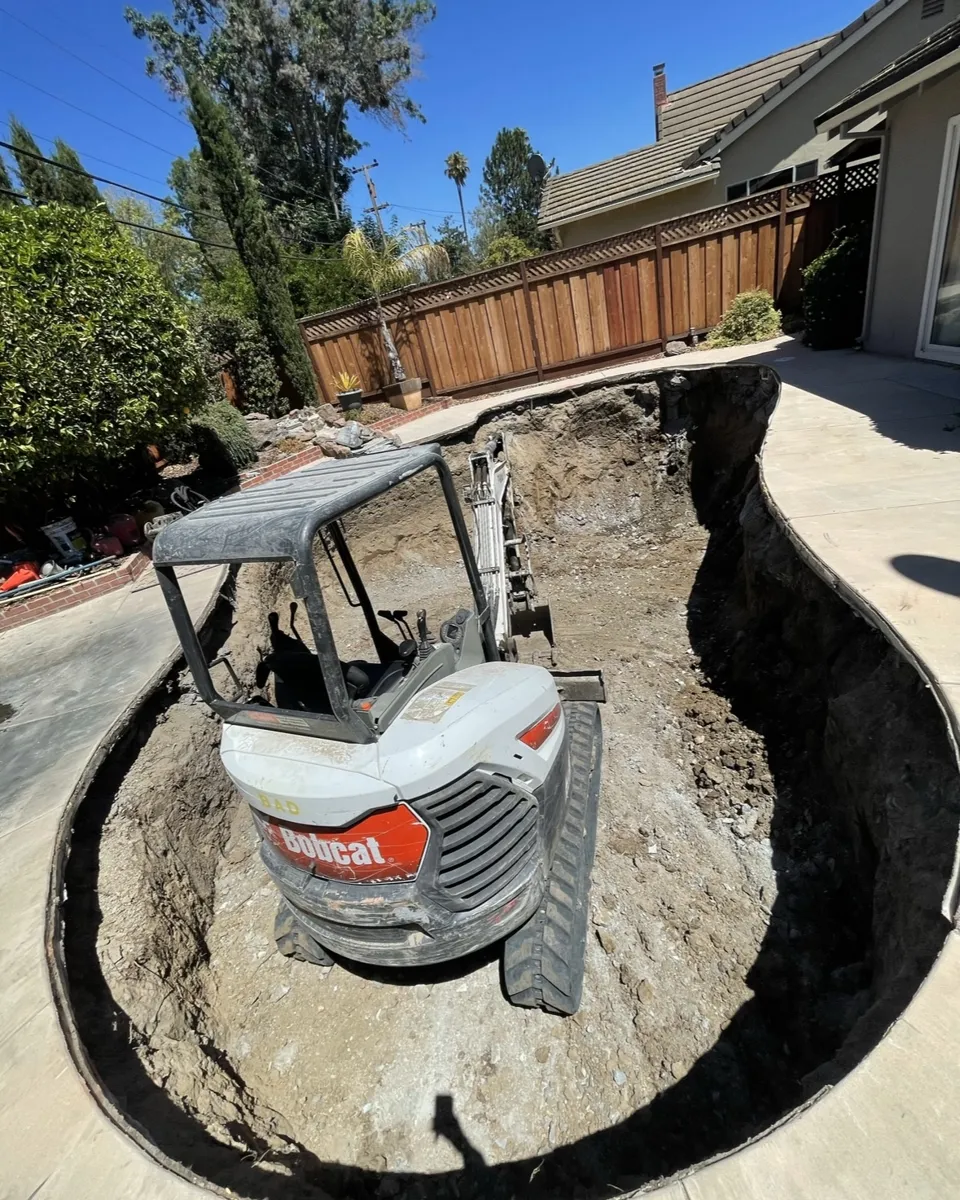
How much the weather matters depends on the type of removal (see partial vs full removal):
- Partial removal (fill-in). In Pleasanton's handout, the top of the pool and the bond beam come out, the floor is opened, and the hole is filled. No compaction test is required because the area is for non-structural use, like lawn or garden.
- Full removal. The entire shell comes out and the hole is filled with clean engineered fill in lifts of 6 to 12 inches, compacted to at least 90% relative compaction (ASTM D1557). A California licensed geotechnical or soils engineer signs a compaction report at the final inspection. Broken concrete cannot be used as fill.
Soil only reaches its maximum density near the moisture content the lab test sets for it. Fill that is soaked by days of rain will not compact to 90%, and a lift that fails the test has to be dried out or replaced. In winter, that means the backfill is scheduled in dry stretches, the stockpile is covered, and the soils engineer is on site the same days. If you may build an ADU or addition on the spot, plan for a full removal and give the backfill the dry days it needs. Read more in building an ADU after pool removal.
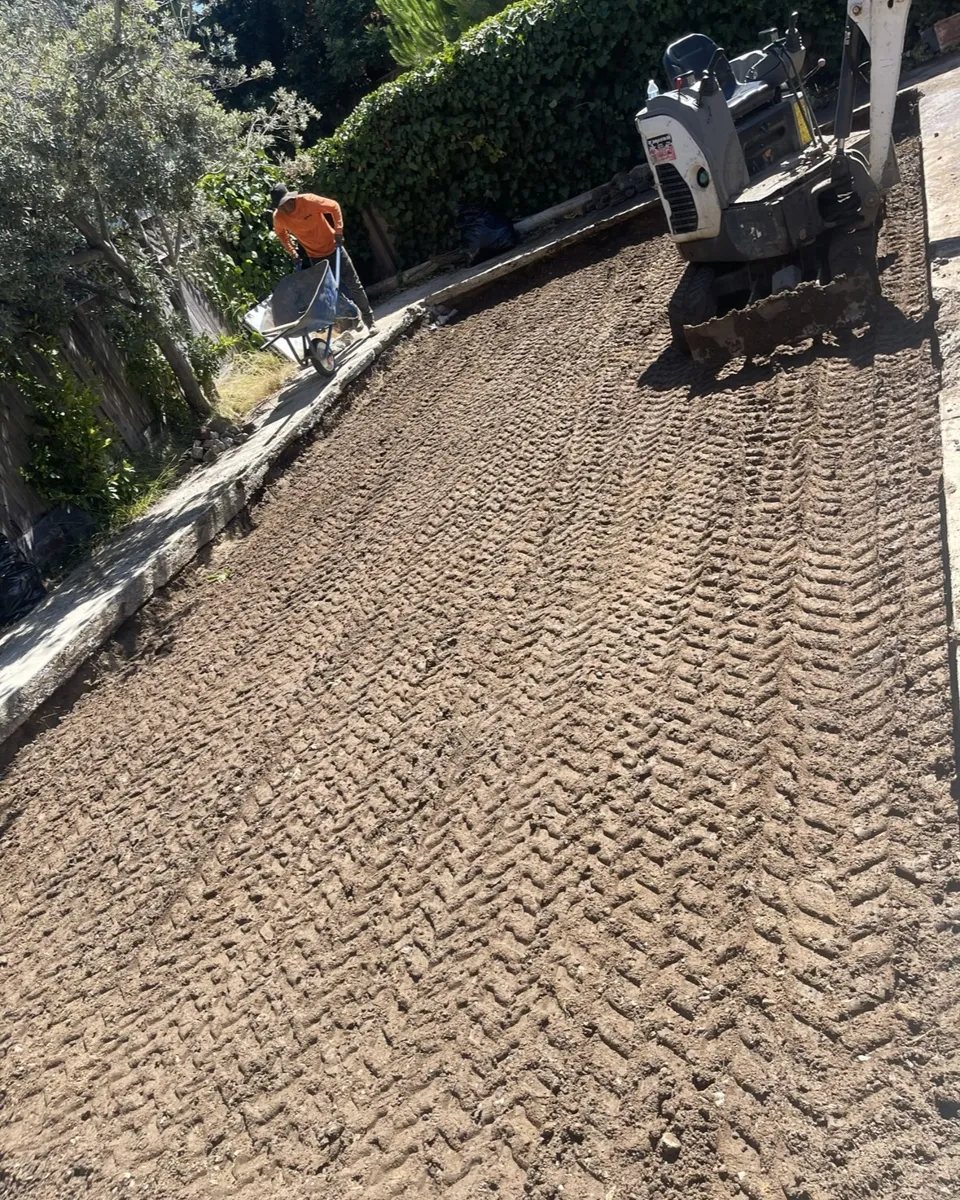
Why winter can still be a good time to start
- Permit review takes time. Plans, the erosion control sheet and the sewer permit can all move forward while it rains, so the work is ready for the first dry stretch.
- Spring yard. If you want new lawn, pavers or a patio by summer, starting the permit in winter keeps that possible.
- Less water and less risk. A pool you do not use still needs to be kept full and treated through the wet season. Once it is gone, there is nothing left to hold water or to fall into.
Questions to ask your contractor before a winter removal
- Who files the erosion control plan and the sewer discharge permit?
- How many days will the pool sit empty before the floor is broken?
- For a full removal, who is the soils engineer and when are the compaction tests?
- What happens to the schedule if a storm hits in the middle of the backfill?
- Is the contractor licensed? Check the license number on the CSLB website.
Bay Demo is a licensed demolition contractor (CA License #1055298) based in Walnut Creek. See how a removal runs from start to finish in our pool removal process guide, what it costs on our pool removal cost page, or ask for a free on-site estimate below.
Frequently asked questions
Can you remove a pool during the rainy season in the Bay Area?
Yes. We did not find an East Bay or South Bay city that bans residential pool removal in winter. Most cities ask for an erosion and sediment control plan for grading in the rainy season, and Oakland has a wet weather grading moratorium from October 15 to April 15 that needs the building official's approval.
Can I drain my pool into the street when it rains?
No. Pool water never goes to the storm drain in Contra Costa or Alameda county. It goes to the sanitary sewer cleanout. Central San requires a free permit with 48 hours of notice, a maximum flow of 20 gallons per minute and a pH between 5.5 and 11.5.
Is it safe to leave an inground pool empty in winter?
It is risky. Rain that soaks the soil pushes on the empty shell, and an empty pool can lift if the hydrostatic relief valve does not work. Keep the pool full until the removal, then go from draining to breaking the floor without long gaps.
Does rain affect the compaction test for a full pool removal?
Yes. Fill only reaches the required density, often 90% relative compaction (ASTM D1557) as in Pleasanton, near the right moisture content. Soaked fill fails the test, so backfill is scheduled in dry stretches with the soils engineer on site.